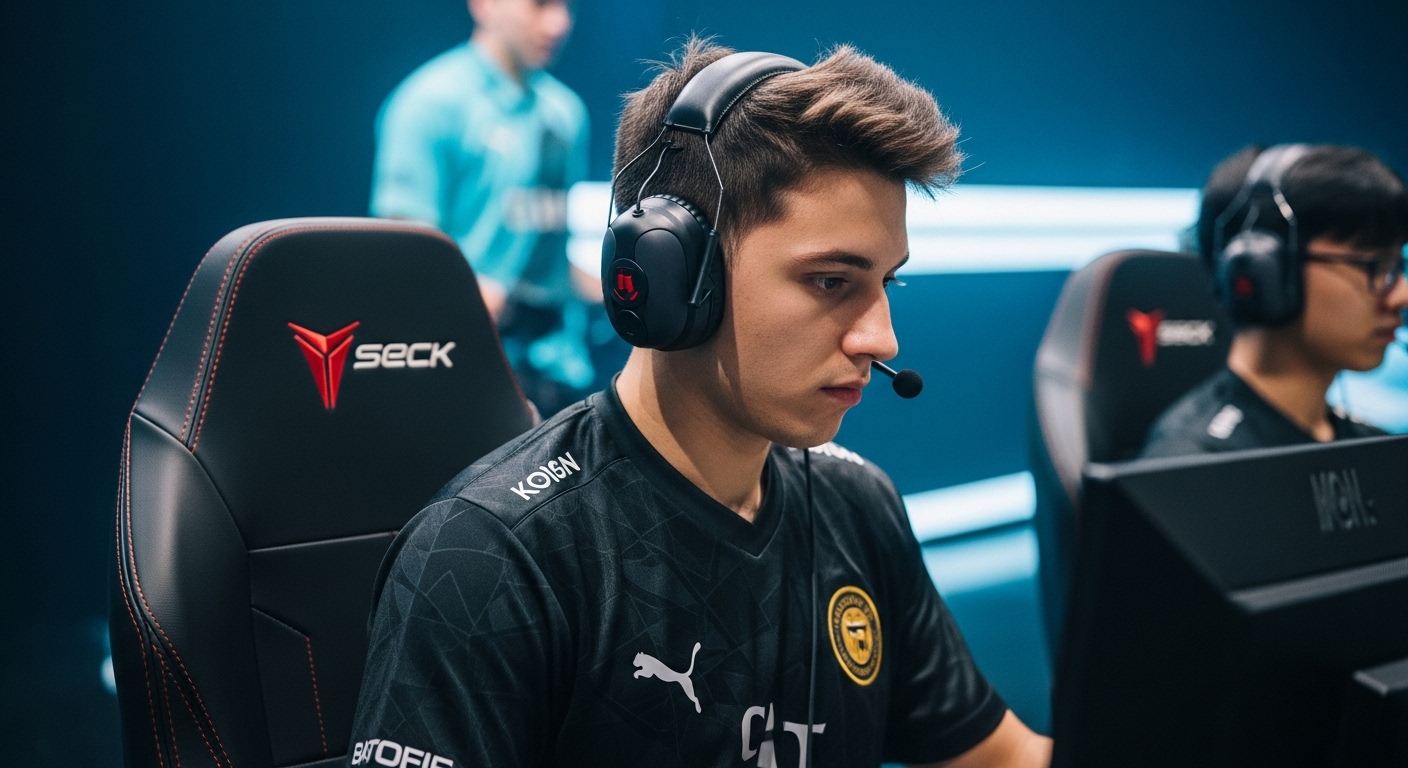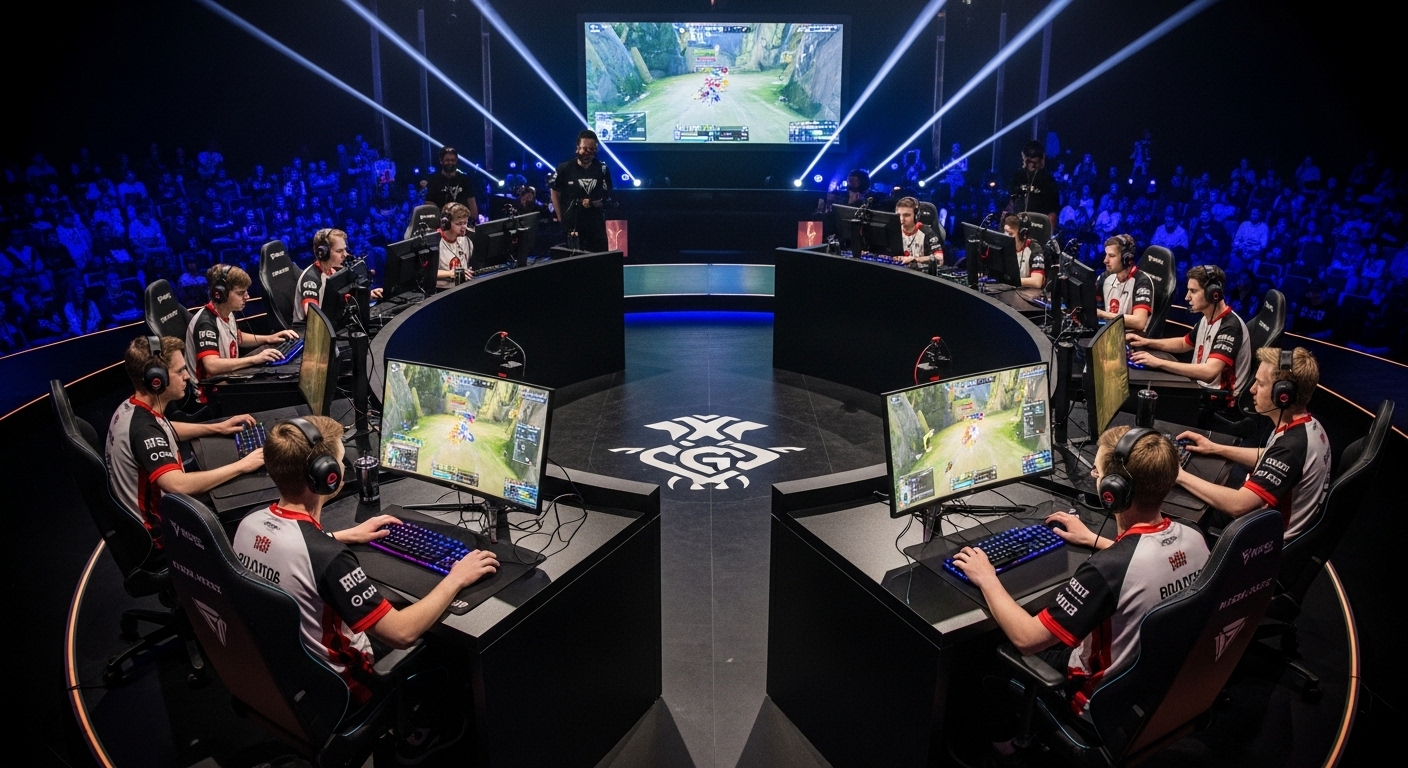






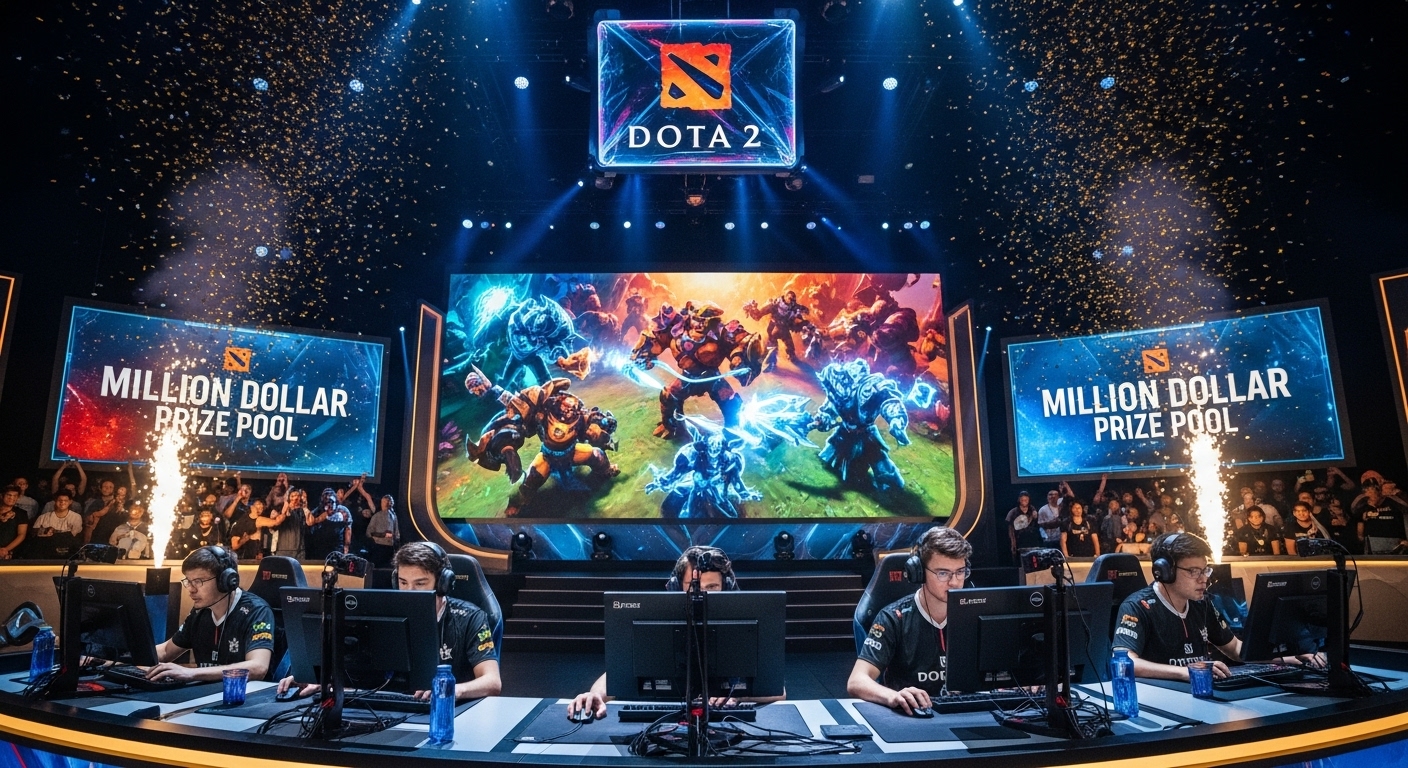
Dota 2 isn’t just a game; it’s a global phenomenon, a competitive battlefield where strategy, teamwork, and individual skill converge in a spectacle watched by millions. Developed by Valve Corporation and released in 2013, Dota 2 quickly rose to the forefront of the esports industry, largely due to its intense gameplay and its groundbreaking approach to prize pools, most notably through its annual tournament, The International (TI). With prize pools reaching astronomical figures exceeding $40 million, Dota 2 has set a standard in competitive gaming that few can rival. But how did a game based on a fan-made mod become the face of million-dollar esports competitions? Let’s dive deep.
The Origins of Dota 2
Dota 2 traces its roots to Defense of the Ancients (DotA), a custom map for Blizzard Entertainment’s Warcraft III. DotA was not a product of a professional studio but the labor of passionate modders. Over time, this community-driven project gained a dedicated following. Its appeal lay in its complexity: every match was a test of strategy, reflexes, and teamwork.
Valve recognized the potential of DotA’s community and gameplay, acquiring the rights to the franchise and releasing Dota 2 in 2013. While retaining the core mechanics, Valve polished the graphics, improved matchmaking, and expanded the esports ecosystem, creating a game ready for the global stage.
Understanding the Gameplay
At its heart, Dota 2 is a 5v5 multiplayer online battle arena (MOBA). Each player controls a “hero,” a unique character with distinct abilities, strengths, and weaknesses. The objective is deceptively simple: destroy the enemy team’s Ancient, a structure located within their base. Yet, the path to victory is fraught with complexity.
- Heroes and Roles: Dota 2 features over 120 heroes, each filling roles such as carry, support, offlaner, and midlaner. Balancing team composition is crucial.
- Items and Economy: Gold earned through killing creeps, heroes, or structures is used to purchase items that enhance abilities, adding a layer of strategic depth.
- Maps and Objectives: The standard map is divided into Radiant and Dire sides, with three lanes, jungle areas, and neutral objectives like Roshan, whose defeat grants major advantages.
This layered gameplay ensures that no two matches are identical, and the constant evolution of strategies keeps players and spectators engaged for years.
The Birth of Million-Dollar Prize Pools
While competitive gaming existed long before Dota 2, Valve revolutionized esports financing with The International. The inaugural TI in 2011 had a prize pool of $1.6 million, of which $1 million went to the winning team, Natus Vincere (Na’Vi). This was unprecedented for esports at the time, signaling that gaming could be more than a hobby; it could be a career with life-changing rewards.
Valve innovated further with crowd-funded prize pools. Through the Battle Pass system, a portion of in-game purchases by the global community contributes directly to the TI prize pool. This model has resulted in unprecedented funding, with The International 2023 reaching over $40 million, making it the highest in esports history.
The International: Esports’ Pinnacle Event
The International is more than a tournament; it is a cultural event. Held annually, it brings together the best Dota 2 teams from around the world. Qualifying is intense, involving regional tournaments and open qualifiers. By the time the main event begins, the stakes are astronomical, and every move is scrutinized by millions of fans online and in the stadium.
Key aspects of The International include:
- Global Reach: Teams from Asia, Europe, North America, and South America compete, showcasing diverse playstyles.
- Spectator Experience: Valve invests heavily in production value, with live broadcasts, interactive digital overlays, and expert commentary.
- Legendary Matches: TI has given us some of esports’ most memorable moments, such as OG’s historic back-to-back wins in 2018 and 2019.
The International not only determines the best team of the year but also sets benchmarks for esports professionalism and spectacle.
Economics of Dota 2 Esports
The financial ecosystem of Dota 2 is multi-faceted, fueled by the combination of developer support, sponsorships, media rights, and merchandise. Here’s how the economics unfold:
- Crowd-Funded Prize Pools: Through in-game purchases, players contribute directly to prize money.
- Sponsorships: Corporate sponsors like Red Bull, Intel, and Twitch play a significant role in supporting teams and tournaments.
- Merchandise and Digital Goods: Team jerseys, cosmetic items, and exclusive digital content generate revenue while promoting fan engagement.
- Media Rights and Streaming: Twitch, YouTube Gaming, and other platforms generate advertising revenue that sustains esports tournaments.
This financial model not only makes esports viable but positions Dota 2 as a lucrative career path for skilled players.
The Competitive Scene and Team Dynamics
Dota 2’s professional scene is known for its rigor. Players dedicate countless hours to mastering heroes, strategies, and teamwork. Unlike individual-centric esports, Dota 2 emphasizes team coordination and synergy. Teams often form tight-knit squads that train together for years, developing deep communication and strategic understanding.
Some of the most iconic teams in Dota 2 history include:
- OG: Known for their unprecedented wins and innovative strategies.
- Team Secret: Famous for consistent high-level performance across multiple TIs.
- Natus Vincere (Na’Vi): Pioneers in early TI competitions, setting the standard for competitive professionalism.
The team dynamics, leadership, and coaching structures in Dota 2 mirror traditional sports, highlighting the maturation of esports as a serious, strategic endeavor.
Player Lifestyle and Dedication
Professional Dota 2 players face intense demands. Training regimens often exceed 10-12 hours daily, including hero mechanics practice, team scrims, strategy sessions, and reviewing opponents’ gameplay. Mental and physical health management is critical, as burnout and fatigue are common risks.
Despite the challenges, the allure of million-dollar prize pools drives players to maintain peak performance. Winners of The International often achieve global recognition, sponsorship deals, and opportunities to influence the game’s development itself.
Community and Fan Engagement
A key factor in Dota 2’s success is its passionate community. Fans aren’t just spectators; they actively contribute to the ecosystem:
- Battle Pass Purchases: Fund the prize pools directly.
- Fan Art and Content: Enhance community engagement and culture.
- Social Media Interaction: Teams and players maintain a dialogue with fans, creating loyal followings.
This symbiotic relationship between players, fans, and developers fosters a vibrant ecosystem where everyone has a stake in the game’s success.
The Strategic Depth That Fuels Its Popularity
Unlike some esports that rely heavily on mechanical skill alone, Dota 2 demands strategic thinking at every level. Teams must make high-stakes decisions regarding hero selection, resource allocation, timing for objectives, and counter-strategies against opponents. Even the smallest mistakes can snowball into decisive losses.
The depth of the game ensures high replay value and analytical discussion, making it a favorite among both casual viewers and hardcore strategists. Analysts and commentators dissect matches in minute detail, creating content that extends the game’s reach beyond live competitions.
Challenges Facing Dota 2 Esports
Despite its successes, Dota 2 is not without challenges:
- Complexity: Its steep learning curve can intimidate new players, limiting mainstream adoption.
- Player Burnout: The pressure to perform consistently at TIs can affect mental health.
- Evolving Metas: Frequent patches and hero rebalancing require players to constantly adapt.
- Market Competition: Competing esports titles like League of Legends and Valorant draw audience attention away.
Valve and the community continuously address these issues through updates, player support systems, and engagement initiatives.
Dota 2’s Influence on Esports
Dota 2 has left an indelible mark on the esports industry. Its crowd-funded prize model inspired similar approaches in other games. The level of professionalism, production quality, and global reach set a benchmark that new esports titles aspire to meet. Moreover, it legitimized gaming as a career capable of offering financial stability, fame, and international opportunities.
The game’s influence extends to educational and analytical domains as well, with universities and analysts studying its mechanics and team strategies, bridging the gap between gaming and professional strategic disciplines.
The Future of Dota 2 Esports
Looking ahead, Dota 2’s future remains promising but dynamic:
- Technological Integration: Improved streaming technology, augmented reality, and AI-driven analytics may enhance viewer experience.
- Expanding Markets: Asia and South America continue to grow as competitive hubs.
- Community Engagement: Continued reliance on community funding ensures that fans remain invested in the game’s future.
- Evolving Gameplay: Regular patches and hero introductions keep the competitive meta fresh and challenging.
While competition is fierce in the esports landscape, Dota 2’s unique combination of depth, spectacle, and financial incentives positions it as a lasting pillar of professional gaming.
Conclusion
Dota 2 is more than just a game; it is a global stage where skill, strategy, and passion converge. Its massive prize pools, epitomized by The International, demonstrate the financial and cultural potential of esports. From its humble beginnings as a Warcraft III mod to a multi-million-dollar competitive industry, Dota 2 exemplifies how community-driven passion, innovative funding models, and professional competition can create a phenomenon that resonates worldwide.
For players, Dota 2 offers a chance to achieve legendary status, financial rewards, and lifelong memories. For fans, it provides endless hours of thrilling matches, community engagement, and shared excitement. For the esports industry, it remains a beacon of what competitive gaming can achieve, proving that a game, at its core, can evolve into a global cultural and economic powerhouse.